On this page
Where do the spiderweb scratches on my paint come from?
Mostly from washing. Spinning brushes in tunnel washes, a gritty sponge, or a dry towel dragged across dusty paint all leave very fine scratches in the clear coat. Each one is shallow, but there are thousands, and in direct sun they catch the light as rings around the reflection. Dark colors show them worst.
These swirl marks sit in the top of the clear coat, which is why polishing can remove them: it levels the surface back to a smooth layer. Deeper scratches that catch a fingernail may only be reduced.
Why does he check paint thickness before polishing?
Because every pass of a polisher removes a tiny amount of clear coat, and there is only so much to spare. A paint depth gauge shows how thick the layers are on each panel, and repainted panels often read differently from factory ones. That tells him how far he can safely go before he touches the whole car.
A test spot comes next. He polishes a small section, checks the result in good light, and uses it to choose the level, so you are not paying for more correction than the paint needs.
Which level of correction suits a daily driver?
Usually the middle one. A single-stage gloss revival brightens paint with light defects. The two-stage enhancement takes out the heavier swirl patterns most commuter cars carry. Multi-stage restoration is for neglected or very dark paint, and it can finish with a ceramic topper. The main paint correction page explains what each level includes.
How do I keep swirls from coming straight back?
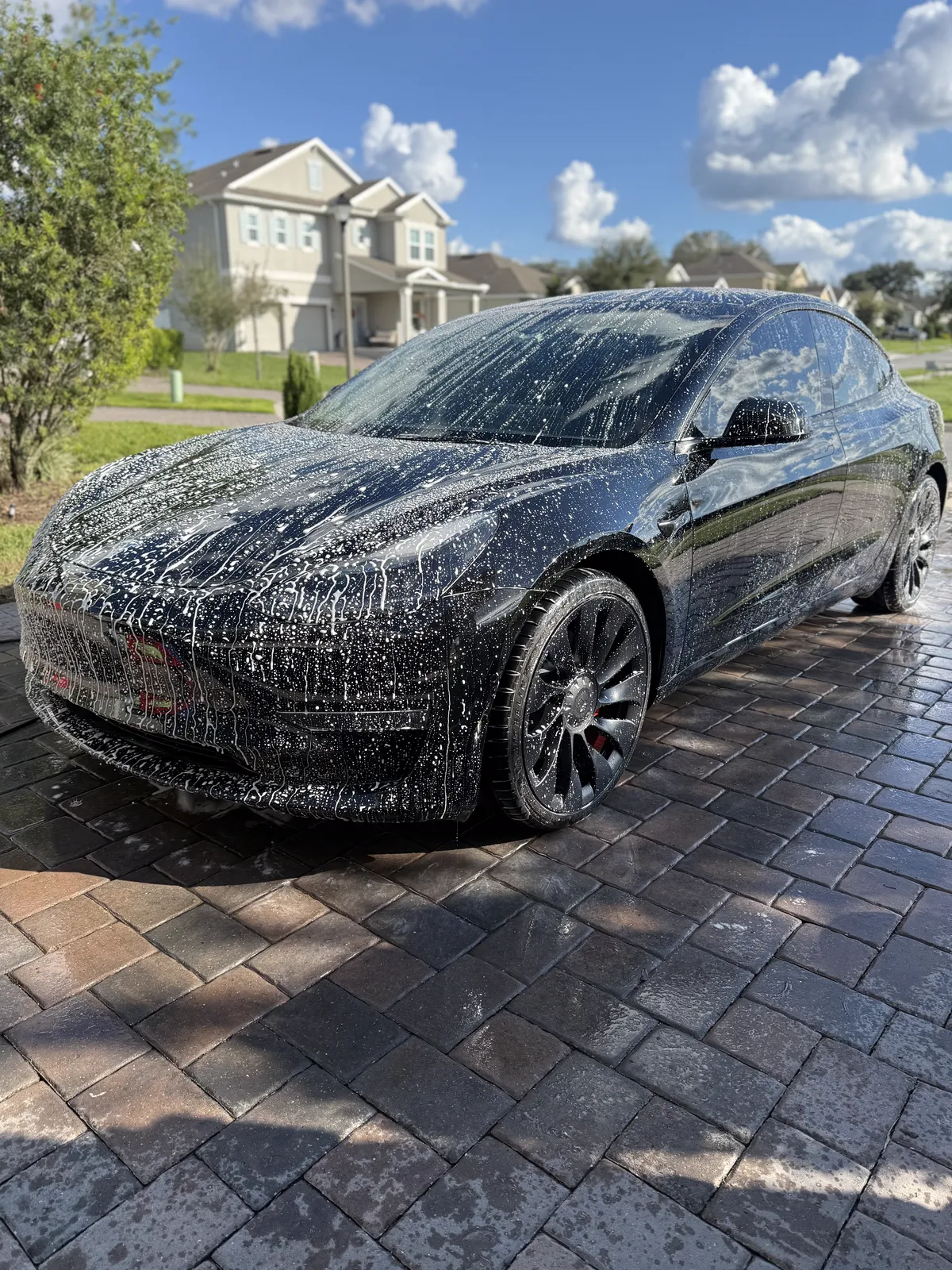
Change how the car is washed. Skip brush washes, wash by hand with the two-bucket method and a clean mitt, and dry with soft microfiber rather than a chamois. Better still, protect the corrected paint with a ceramic coating, which makes washing gentler because dirt lets go more easily.
The Ocoee area guide covers the drive and the town, and the explainer below covers what polishing can and cannot fix.
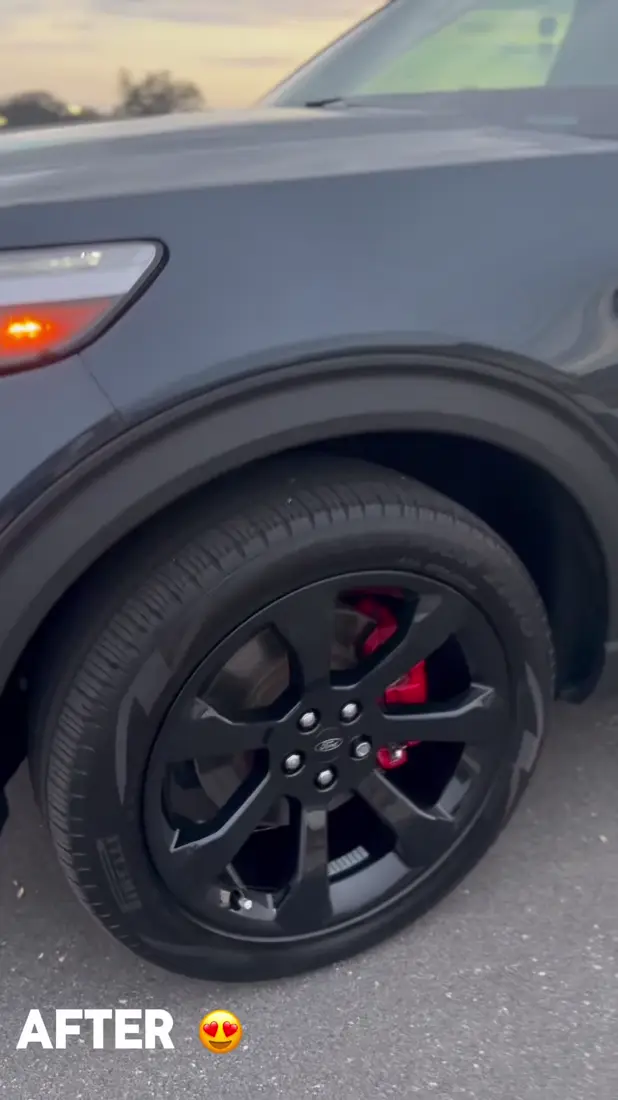
Gloss restored on an Explorer ST · his own job
Terms on this page: swirl marks · paint depth gauge · two-bucket method · automatic car wash (in the detailing glossary).